What is a Generator? Buyer's Guide to Choosing & Using a Generator in 2026
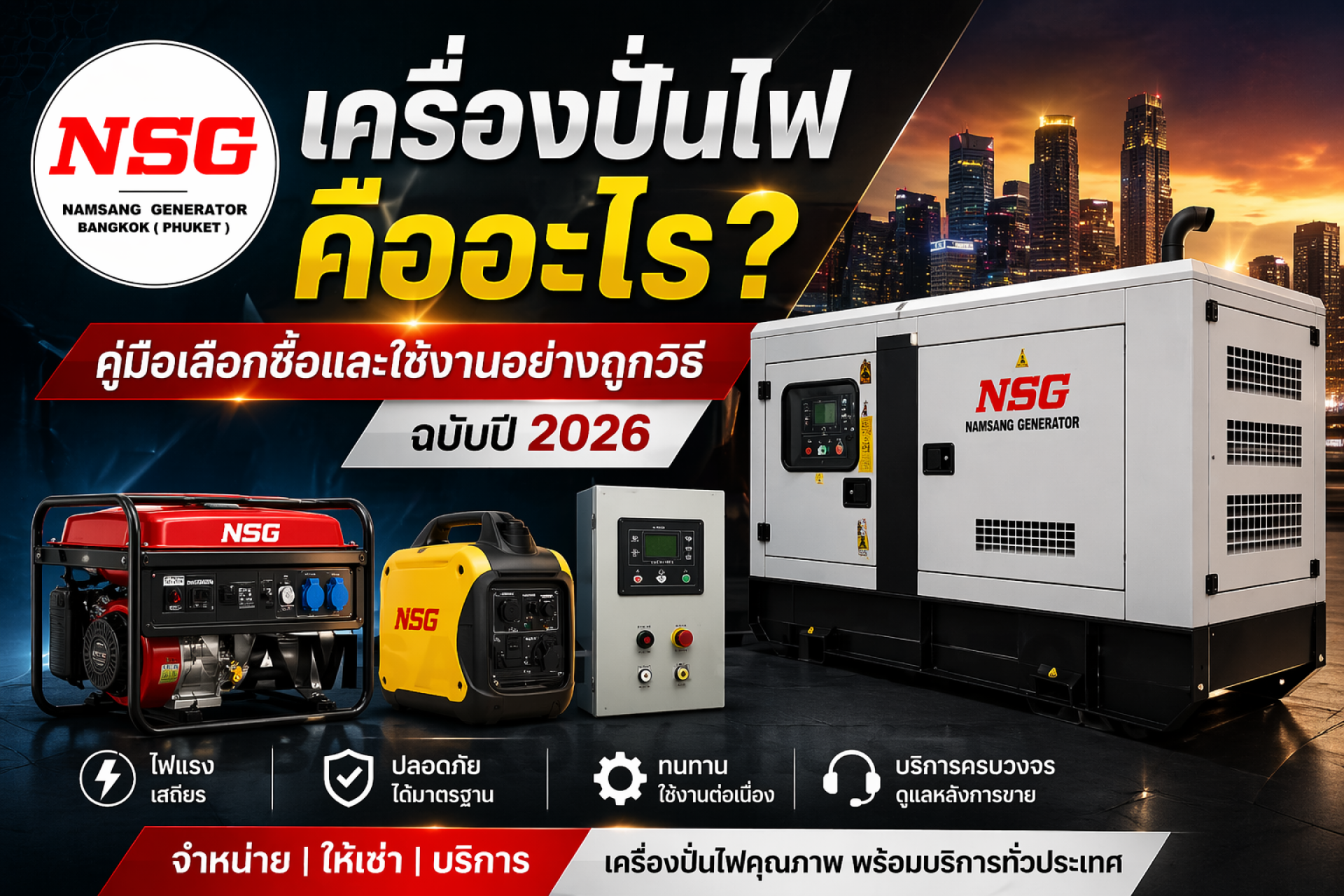
What is a Generator?
A generator is a device that converts mechanical energy into electrical energy through the principle of electromagnetic induction. Generators play a critical role as backup power sources during outages or emergencies. They are indispensable for factories, office buildings, hospitals, government facilities, and even homeowners who require uninterrupted power supply.
How Does a Generator Work?
A generator consists of two main parts: the engine (typically diesel or gasoline) and the alternator. When the engine rotates the shaft connected to the alternator, it creates an electromagnetic field that generates alternating current (AC). The electricity then passes through an Automatic Voltage Regulator (AVR) to maintain stable voltage and frequency before supplying the connected electrical equipment.
Types of Generators Commonly Used in Thailand
1. Diesel Generator
The most popular type in industrial, hotel, hospital, and large office sectors. Diesel generators range from tens of kilowatts up to several megawatts. Key benefits include durability, robust construction, fuel efficiency, and long service life.
2. Gasoline Generator
Ideal for residential use, small shops, outdoor events, and camping. Lightweight and portable, gasoline generators are more affordable than diesel units at the same power rating, though they have shorter continuous run times and lifespans.
3. Gas Generator
Runs on NGV or LPG fuel. Environmentally friendly with lower emissions and quieter operation. Popular in biomass power plants and sustainability-focused facilities.
4. Inverter Generator
Produces clean, stable power safe for sensitive electronics such as computers, cameras, and medical equipment. Ideal for outdoor events, travel, and camping.
How to Choose the Right Generator Size (kVA)
Selecting the right size is critical. An undersized generator will overwork and fail quickly, while an oversized one wastes fuel and budget. Use this calculation process:
- Sum total power of all equipment you plan to run (in watts W or kilowatts kW).
- Account for starting load – motors, air conditioners, and water pumps can draw 3–7 times their rated power during startup.
- Add 20–25% reserve capacity for future expansion and longer service life.
- Convert kW to kVA using the formula: kVA = kW ÷ Power Factor (typically 0.8).
Example: If the total load is 40 kW, the required generator is 40 ÷ 0.8 = 50 kVA. Adding 25% reserve gives approximately 62–65 kVA.
Generator Maintenance Tips for Long-lasting Performance
- Check engine oil, fuel, and coolant levels before every start.
- Perform a test run at least once a week for 15–30 minutes.
- Replace oil and air filters according to the manufacturer's schedule.
- Inspect the starter battery and drive belts for proper condition.
- Clean the engine room and ventilation system regularly.
- Schedule preventive maintenance every 6 months or based on operating hours.
Safety Precautions When Using a Generator
Always install the generator in a well-ventilated area, away from flammable materials. Never operate it in enclosed spaces because exhaust gases contain dangerous carbon monoxide. Ensure a proper grounding system is installed, and never refuel the generator while it is running or still hot.
Frequently Asked Questions (FAQ)
Q: How many watts can a 1 kVA generator supply?
A: Approximately 800 watts at a Power Factor of 0.8. Always account for starting loads and losses.
Q: Should I rent or buy a generator?
A: Renting is more economical for one-off needs such as events or short construction projects. For continuous backup power in factories or buildings, buying provides better long-term value.
Q: How much fuel does a generator consume per hour?
A: It depends on size and load. On average, a 100 kVA diesel generator at 75% load consumes 18–22 liters per hour.
Conclusion
A generator is an essential device that keeps your business running smoothly. Choosing the right one requires careful consideration of fuel type, kVA capacity, application, and budget, along with consistent maintenance. If you are looking for high-quality generators or generator rental services with installation, our team of experts is ready to provide consulting, system design, and comprehensive after-sales support.